
Roof Coverings for Timber Garden Cabins: What to Consider
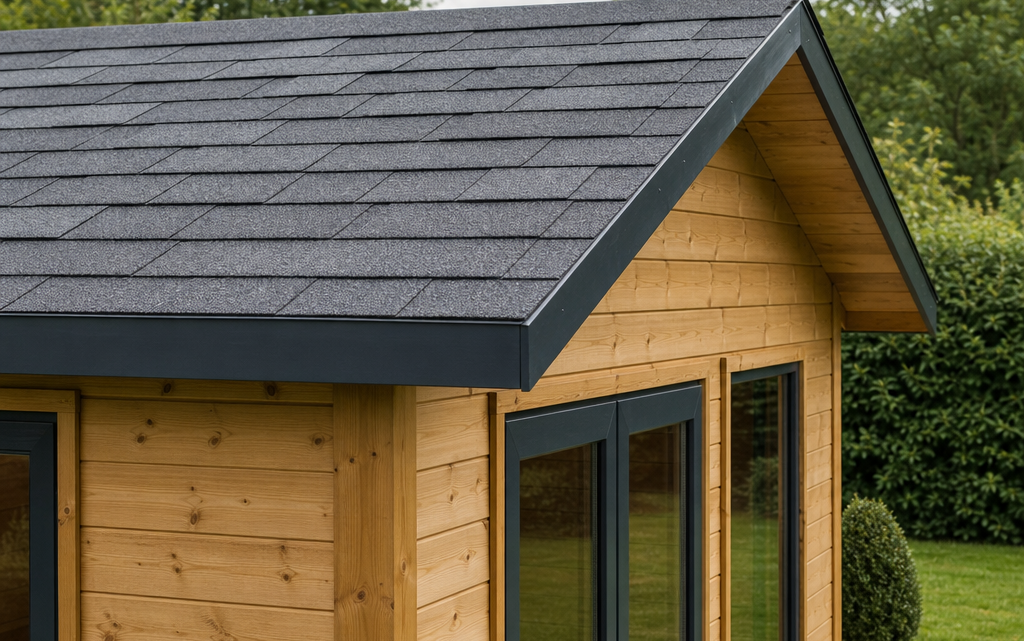
You have chosen a timber garden cabin, the base is booked in, and the delivery date is approaching. Then you notice an important detail in the specification: the roof boards are included, but the final roof covering may not be. This is a common point of confusion when buying log cabins and summer houses, and it matters more than many buyers realise. The timber roof structure gives the building its shape and strength, but the weatherproof covering is what keeps rain out over the long term.
Choosing the right roof covering for a timber garden cabin is not simply a matter of picking the cheapest option. You need to think about roof pitch, expected lifespan, installation method, exposure to wind and rain, maintenance, appearance, and whether you are confident fitting it yourself. This guide explains the main considerations so you can make a practical, informed choice before your cabin arrives.
Inhaltsverzeichnis
Why the Roof Covering Deserves Careful Thought
A timber cabin is exposed to the weather every day. Even a well-built structure with strong wall logs, tongue and groove roof boards and a good base can suffer if the roof covering is unsuitable or poorly fitted. Water ingress can stain internal timber, encourage mould, cause swelling, and shorten the life of roof boards and wall timbers.
The roof covering is also one of the hardest parts to upgrade once the building is in use. Furniture, electrics, insulation and interior finishes may all be affected if leaks develop. It is usually cheaper and easier to choose the correct covering during the initial assembly than to repair a failed roof later.
Understand What Is Included with the Cabin
Before comparing roof covering options, read the product description carefully. Many timber garden buildings include the roof structure but not the final weatherproof layer. Others include a basic felt, while premium coverings may be offered as optional upgrades.
Do not assume that “roof included” means “ready to withstand years of rain”. In many cases, the supplied roof boards are structural timber boards, such as tongue and groove cladding, which require a suitable outer covering. If a product states that no roof covering is included, you must choose and fit one before relying on the building for storage, working or leisure use.
Key questions to ask before buying
- Is a roof covering included, or only the roof boards?
- If included, is it a temporary underlay, standard felt, or a long-life covering?
- Is the roof covering compatible with the cabin’s roof pitch and shape?
- Are adhesives, trims, fixings and edge details included?
- Can you install it yourself, or is professional fitting recommended?
- Will the chosen covering affect the guarantee if fitted incorrectly?
Main Roof Covering Options for Timber Garden Cabins
The best covering depends on the cabin design and your expectations. A small seasonal summer house may not require the same specification as a cabin used as a home office throughout the year. However, even occasional-use buildings need proper weather protection.
Roof underlay felt
Roof underlay felt is usually the simplest and cheapest option. It is commonly nailed or fixed onto the roof boards and can provide short-term protection. However, underlay felt should generally be treated as a temporary layer or as part of a wider roofing system rather than a long-term final finish, unless the manufacturer clearly states otherwise.
It can be useful if you need immediate protection while arranging a more durable covering. For example, if your cabin is assembled in unsettled weather, underlay may help protect the roof boards in the short term. The main risk is leaving a temporary covering in place for too long and assuming it will perform like a permanent roof.
SBS felt
SBS felt is a heavier-duty felt system designed to provide a more robust waterproof layer. Some SBS products are torch-on, meaning heat is used during installation to bond the material. This can produce a durable finish when fitted correctly, but it is not usually suitable for casual DIY installation.
If a torch-on system is specified, fire safety and installation skill are serious considerations. You should only attempt this if you have the correct experience, equipment and confidence. Otherwise, use a professional installer. Poorly fitted felt can wrinkle, lift, split at joins or fail at edges, especially on exposed sites.
EPDM rubber roofing
EPDM is a synthetic rubber membrane often used for flat or low-pitched roofs. It is supplied as a sheet and can offer a long-lasting, watertight finish when installed properly. It is especially popular where fewer joins are desirable.
EPDM is not simply rolled out and forgotten. It must be measured, positioned, adhered and detailed correctly around edges and corners. Depending on the supplier, adhesives, trims and fixings may not be included, so you need to check exactly what is supplied. The roof boards should be clean, dry and suitable for bonding before installation.
Shingles and tiles
Some cabins are suitable for decorative bitumen shingles or lightweight roof tiles, particularly where the roof pitch is steep enough. They can improve appearance and create a more traditional garden building look. However, they are not appropriate for every roof design, especially very low-pitched roofs where water may not shed quickly enough.
Before choosing shingles, confirm compatibility with the roof angle, timber structure and manufacturer’s guidance. Extra weight, fixing requirements and ventilation details may also matter.
Match the Covering to the Roof Design
The roof shape and pitch should guide your decision. A steep apex roof naturally sheds rain more quickly than a shallow pent or flat-style roof. Low-pitched roofs need coverings that resist standing water and wind-driven rain. Joints, overlaps and fixings become especially important when water drains slowly.
You should also consider overhangs and edges. The centre of a roof is rarely the first place to fail; problems often begin at the eaves, verges, ridge, corners, nail holes or poorly sealed joins. A good covering system includes proper finishing details, not just a sheet of material.
Exposure to weather
A cabin in a sheltered town garden may face less stress than one in an open rural plot or coastal location. If your garden is windy, exposed or surrounded by trees, choose a covering with a stronger fixing method and longer expected service life. Falling branches, moss, leaf build-up and constant shade can all affect roof performance.
In wet areas of the UK, a higher-grade covering is often a sensible investment. The cost difference at the time of purchase may be modest compared with the inconvenience of water damage later.
Use the Product Specification as a Practical Prompt
When comparing cabins, use the roof details in the product description as a prompt for your roof covering decision. For example, a timber cabin may include sturdy roof boards but still require you to select the final waterproof layer separately. That is not necessarily a problem; it simply means you have a decision to make before assembly.
As a practical example, the Palmako Ella 2 3.2m x 3.2m Log Cabin Summer House is described as having 28mm Nordic spruce interlocking logs, a 19mm tongue and groove roof, and no roof covering included. The available roof covering options mentioned are SBS, EPDM or roof underlay felt. This illustrates why you should read beyond the headline cabin size and price: the roof structure and the roof covering are separate parts of the overall weatherproofing system.
The example also shows why installation skill matters. SBS is described as a thick torch-on weatherproof felt with a long lifespan, but suitable only for advanced DIYers or professionals. EPDM is described as a thick weatherproof rubber sheet, but fixings and adhesives are not included. Roof underlay felt is simple to nail on, but should be used only temporarily or as an underlay to a permanent covering. These distinctions are exactly the kind of practical detail you should look for with any cabin.
Decision Criteria: How to Choose the Right Covering
To make a sound choice, work through the following criteria rather than deciding on price alone.
1. Expected use of the cabin
If the building will store garden tools, cushions or bicycles, leaks are still inconvenient but may not be disastrous. If you plan to use the cabin as a hobby room, gym, studio or office, roof reliability becomes more important. Any electrical installation, insulation, plasterboard lining or expensive equipment should push you towards a longer-life covering.
2. Lifespan and maintenance
Cheaper coverings may need earlier replacement. More durable systems can cost more upfront but reduce future disruption. Ask how often the covering should be inspected and what maintenance is required. You should still check any roof regularly, particularly after storms, but a higher-grade covering should usually give better long-term protection when properly fitted.
3. Installation complexity
Be honest about your DIY skills. Working on a roof requires safe access, patience and accurate detailing. Torch-on systems add fire risk. Large rubber membranes can be awkward to handle, particularly in wind. If a manufacturer recommends advanced DIY skills or professional installation, take that advice seriously.
4. Complete system cost
Do not compare materials on headline price only. Include adhesives, nails, trims, drip edges, ridge details, delivery, tools, waste and labour. A covering that looks economical may become less attractive once you add the missing components.
5. Appearance
The roof is a visible part of the cabin, especially on taller buildings or those viewed from upstairs windows. A neat, well-finished covering improves the overall look. However, appearance should not override suitability. A decorative option that is wrong for the roof pitch can create long-term problems.
Roof Covering Checklist Before Installation
Use this checklist before fitting or commissioning the roof covering:
- Confirm that the cabin roof boards are fully installed, secure and dry.
- Check the roof pitch and confirm the covering is suitable for that angle.
- Read the manufacturer’s instructions for both the cabin and the covering.
- Make sure all adhesives, fixings, trims and edge pieces are available.
- Inspect the weather forecast and avoid fitting in heavy rain or high winds.
- Plan safe access using suitable ladders, platforms or scaffolding where needed.
- Check that overlaps, joints, edges and corners are detailed correctly.
- Avoid trapping moisture beneath the covering.
- Keep any guarantee requirements in mind, including treatment and maintenance obligations.
- Photograph the finished roof for your records, especially if using a professional installer.
Common Practical Mistakes to Avoid
Leaving roof boards exposed
Tongue and groove roof boards are not a substitute for a waterproof covering. If they are left exposed to rain, they can absorb moisture, swell, stain or deteriorate. Fit the covering promptly after assembly.
Using temporary felt as a permanent solution
Temporary underlay can be useful, but it should not be treated as a long-term roof covering unless it is specifically rated for that purpose. If the product information says it is temporary or an underlay, plan the permanent covering from the start.
Ignoring missing accessories
Some coverings are sold without adhesives, fixings or trims. If you only discover this on installation day, the roof may be left unfinished. Check the contents in advance and order everything required.
Choosing a covering unsuitable for the pitch
Low-pitched roofs need particular care because water drains away more slowly. Materials that work well on steep roofs may not be suitable on shallow ones. Always follow the covering manufacturer’s minimum pitch guidance.
Poor edge detailing
Many leaks begin at the roof edge. Wind can lift loose edges, and water can track underneath if drip details are poor. Pay close attention to eaves, corners, ridges and any upstands.
Fitting in unsuitable weather
Wind makes large membranes difficult to control. Rain can prevent adhesives bonding properly. Cold temperatures may affect flexibility or curing times. Choose a dry, calm day where possible.
Maintenance After the Covering Is Fitted
A roof covering is not a fit-and-forget part of the cabin. Inspect it at least twice a year and after severe weather. Look for lifting edges, punctures, cracks, loose fixings, blocked gutters, moss build-up and signs of water tracking. Remove leaves and debris, particularly from shallow roofs where material can hold moisture against the surface.
You should also maintain the timber cabin itself. Many timber cabins are supplied untreated and require preservative treatment after assembly and then ongoing treatment in line with the manufacturer’s instructions. Keeping the walls, trims and surrounding timber in good condition supports the performance of the roof by reducing moisture movement and decay risks.
When to Use a Professional Installer
Professional fitting is worth considering if the roof is large, high, awkwardly shaped, low-pitched, or if the covering requires specialist methods such as torch-on application. You should also use a professional if you are not confident working at height or if the cabin will contain electrics, insulation or valuable equipment.
When hiring an installer, ask what system they recommend and why. Confirm whether they are supplying all trims and adhesives, how they will finish the edges, and whether their work is guaranteed. A neat roof that is properly detailed is usually a better investment than a cheap installation that fails early.
Short FAQ
Do timber garden cabins always come with a roof covering?
No. Some include a basic covering, some offer upgrades, and some include only the roof boards. Always check the product description before ordering.
Can I leave the cabin roof uncovered for a few days?
It is best not to. If delay is unavoidable, protect the roof boards with a suitable temporary waterproof covering, securely fixed, and fit the permanent covering as soon as possible.
Is EPDM better than felt?
EPDM can be a high-quality, long-lasting option when installed correctly, particularly on suitable low-pitched roofs. However, the best choice depends on the roof design, budget, installation skill and complete system specification.
Can I fit torch-on felt myself?
Only if you have the necessary skill, equipment and understanding of fire safety. Where a product recommends advanced DIY skills or professional installation, it is sensible to follow that guidance.
What is the most common cause of cabin roof leaks?
Leaks often result from poor installation details rather than the main material itself. Edges, overlaps, corners, ridges and penetrations are typical weak points.
Conclusion
Selecting a roof covering for a timber garden cabin is a practical decision that affects weather resistance, maintenance and the long-term usability of the building. Start by checking what is included, then match the covering to the roof pitch, exposure, intended use and your installation ability. Temporary underlay, SBS felt, EPDM and decorative options can all have a place, but only when used correctly.
If you are investing in a cabin for regular use, do not treat the roof covering as an afterthought. Choose a suitable system, make sure all components are included, fit it promptly and inspect it regularly. A well-chosen and well-installed roof covering helps protect both the cabin and everything you plan to do inside it.

