Seasonal Safety Checks for a Children’s Timber Playhouse
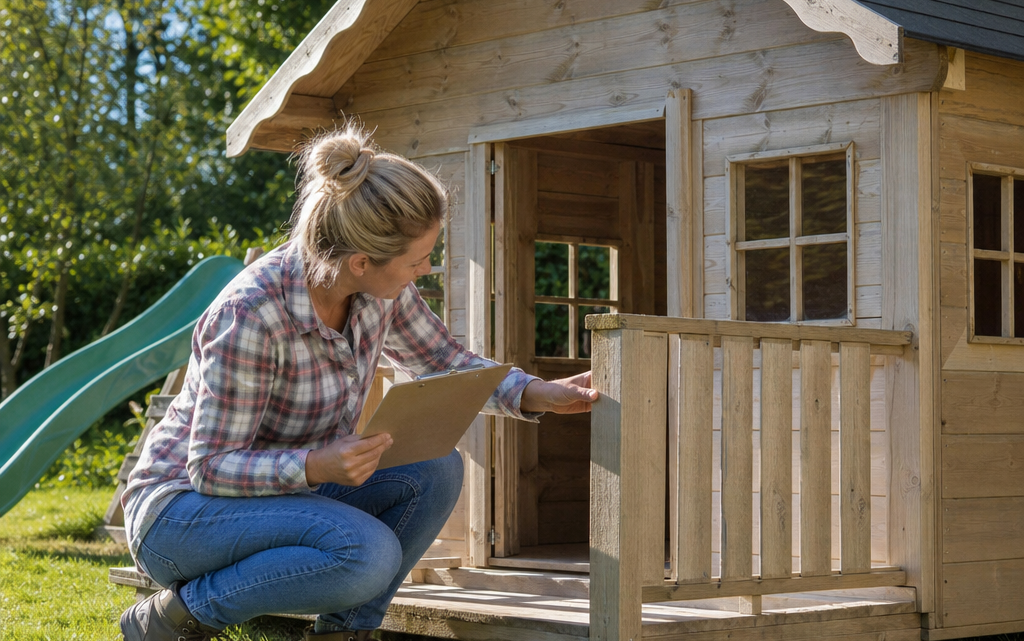
After a wet winter, a windy autumn or a summer of heavy use, a children’s timber playhouse can change more than you might expect. Doors may start to rub, roof felt can lift at the edges, fixings can loosen and damp timber can become a home for algae or early rot. Before children run in and out again, it is sensible to carry out a seasonal safety check. A careful inspection does not need to be complicated, but it should be thorough, regular and focused on the areas most likely to affect safety.
This guide explains how to inspect and maintain a children’s wooden playhouse through the year. It is written for typical domestic garden playhouses made from timber cladding, timber framing, board floors and felted roofs. You should always follow the manufacturer’s instructions for your specific model, but the practical steps below will help you spot problems early and keep the structure safer, cleaner and longer lasting.
Inhaltsverzeichnis
Why seasonal checks matter
A children’s playhouse is exposed to rain, frost, sun, wind, mud and regular play. Even when it has been pressure treated or dip treated, timber still needs care. Seasonal checks help you identify small issues before they become serious. A loose hinge can become a trapped-finger hazard, a lifted roof felt edge can let in water, and a soft patch in the floor can indicate damp damage.
For children, the most important issues are stability, safe access, smooth surfaces, secure doors and windows, dry flooring and the absence of sharp edges or protruding fixings. For the structure, the priority is to prevent prolonged moisture contact, keep the roof watertight and maintain the protective timber treatment.
When to inspect a timber playhouse
You should carry out a quick visual check whenever children are about to use the playhouse after a break, especially after storms or freezing weather. In addition, plan four more detailed seasonal inspections each year.
Spring inspection
Spring is the main recovery check after winter. Look for damp patches, swollen timber, mould, roof felt damage, loose fixings and signs that the base has shifted. This is also a good time to clean the playhouse and prepare for retreatment once the weather is dry enough.
Summer inspection
In summer, focus on sun damage, dry splits, ventilation, wasps or other insects, and general wear from frequent use. Check that doors and windows open smoothly and that any play items inside have not become trip hazards.
Autumn inspection
Autumn is about preparing for wet and windy weather. Clear leaves from around the base, check the roof covering, make sure water drains away, and apply any protective treatment if the manufacturer recommends it and conditions are suitable.
Winter inspection
Winter checks should be brief but important. After storms, inspect the roof, glazing, door, latch and surrounding ground. Avoid letting children use the playhouse if the floor is icy, the roof is damaged, or the structure feels unstable.
Start with the ground and base
The safest playhouse begins with a sound base. Timber playhouses should not sit directly on wet soil or grass for long periods. Persistent moisture beneath the floor encourages rot, affects stability and can cause the building to settle unevenly.
Walk around the playhouse and look at how it sits. It should appear level, stable and properly supported. If one corner has sunk, the door may become misaligned and the floor may flex. Check for puddling after rain. If water gathers beside or underneath the playhouse, improve drainage or consider raising the structure on a suitable level base, following the manufacturer’s guidance.
Decision criteria: is the base still suitable?
- Keep using it if the playhouse is level, the floor feels firm, and rainwater drains away.
- Repair or adjust it if a door has started sticking, one corner has dropped, or the floor flexes noticeably.
- Stop use temporarily if the building rocks, the floor feels spongy, or you can see rotten support timbers.
Check the timber walls and framing
Timber cladding should be inspected from both outside and inside. Look for splits, cracks, gaps, loose boards, raised grain, algae growth and dark staining. A small surface split is common in timber and may not be a safety issue, but sharp splinters, open gaps or soft timber need attention.
Press suspect areas gently with a screwdriver handle or your thumb. Healthy timber should feel firm. If it feels soft, crumbly or sponge-like, it may be affected by rot. Pay particular attention to the lower sections of the walls, corners, areas around windows and doors, and any places where rainwater drips repeatedly.
If you find rough patches, sand them smooth before children use the playhouse. Use appropriate protective equipment and make sure the surface is clean before applying any timber treatment recommended for the product. Choose child-safe, exterior-grade products suitable for play equipment where required, and follow drying times carefully.
Inspect the roof and felt covering
The roof is one of the most important parts of a timber playhouse because even a small leak can lead to damp walls, a weakened floor and mould inside. Felt coverings should lie flat and remain securely fixed. After windy weather, check for lifted corners, tears, missing tacks or cracks along folds and edges.
Inside the playhouse, look up at the underside of the roof. Water staining, dark patches or a musty smell can indicate a leak. If you spot dampness, do not simply paint over it. First identify the source of water ingress, repair or replace the damaged roof covering, and allow the timber to dry properly.
Practical roof care steps
- Choose a dry day and inspect the roof from a safe position without climbing on the playhouse unless the manufacturer says it is safe to do so.
- Remove leaves, twigs and debris carefully so water can run off freely.
- Check felt edges, ridges and corners for lifting or splits.
- Look inside for signs of leaks or condensation.
- Repair minor felt damage promptly using suitable materials, or replace the covering if it is brittle, torn or repeatedly leaking.
Doors, windows, latches and glazing
Children use doors and windows constantly, so they deserve close attention. Hinges should be secure, screws should be tight and the door should move freely without dropping, scraping or slamming unexpectedly. A latch should hold the door closed but should not trap a child inside or be too stiff for safe use.
Check for finger-trap risks around hinges, gaps and closing edges. If the playhouse has a glazed window or a glazed door panel, inspect it for cracks, looseness or sharp edges. Do not allow children to use the playhouse if glazing is damaged. Replace broken or cracked glazing with the correct safe material specified by the manufacturer or a competent supplier.
Opening windows are useful for ventilation, particularly in warm weather, but they should not be loose or capable of falling shut suddenly. Check any stays, hinges and catches, and make sure children cannot climb dangerously through the opening.
Using a real product as a practical example
Different playhouses have different construction details, so your checks should reflect the model you own. For example, a traditional timber playhouse with tongue and groove shiplap cladding, a board floor, a felted apex roof, an opening window and a single door with a latch will need attention to the cladding joints, roof felt edges, floor condition, glazing and moving ironmongery. The manufacturer’s guarantee may also depend on annual retreatment and correct installation, so maintenance is not just good practice; it can be a condition of cover.
The example above illustrates the sort of features you may see on a garden playhouse, but the same inspection principles apply widely. Always treat the manufacturer’s manual as the primary source for your specific product, especially for timber treatment, fixings, glazing replacement and any safety restrictions.
Seasonal safety checklist
Use this checklist at the start of each season and after severe weather. If you answer “no” to any safety-critical item, keep children out of the playhouse until the issue is resolved.
- Base: Is the playhouse level, stable and clear of standing water?
- Floor: Does the floor feel firm, dry and free from soft or spongy areas?
- Walls: Are the timber boards secure, smooth and free from sharp splinters?
- Roof: Is the felt intact, flat and watertight, with no lifted edges?
- Door: Does it open and close smoothly without trapping fingers or sticking badly?
- Windows: Are the window, hinges and catches secure, with no cracked glazing?
- Fixings: Are screws, nails, hinges and latches secure and not protruding?
- Interior: Is the inside dry, clean, well ventilated and free from mould?
- Surroundings: Is the area around the playhouse free from hazards, sharp tools, broken pots and slippery moss?
- Treatment: Is the timber treatment up to date according to the manufacturer’s instructions?
Cleaning without causing damage
Regular cleaning helps you spot defects and prevents moss, algae and grime from holding moisture against the timber. Use a soft brush to remove cobwebs, leaves and loose dirt. A mild soapy solution and a cloth or soft brush are usually enough for general cleaning. Avoid aggressive pressure washing unless the manufacturer permits it, as high pressure can drive water into joints, lift fibres and damage the protective surface.
Inside, remove toys, mats and soft furnishings during cleaning. These can trap damp against the floor if left in place through winter. Let the playhouse air thoroughly by opening the door and window on a dry day. If you find mould, clean it promptly using a suitable product for timber and children’s environments, then address the cause, such as poor ventilation or water ingress.
Annual timber retreatment
Many timber playhouses are supplied with an initial treatment, but this does not always mean they are maintenance-free. Dip-treated timber, in particular, commonly needs regular retreatment with a suitable preservative or protective coating. Some anti-rot guarantees are conditional on annual retreatment and compliance with the manufacturer’s guidelines.
Before retreating, clean the surface and allow it to dry. Lightly sand rough areas and remove dust. Apply the treatment evenly, paying attention to lower boards, exposed edges, corners, end grain, door edges and window surrounds. Do not treat the playhouse while children are using it, and keep them away until the coating is fully dry and safe according to the product instructions.
Choosing the right treatment
Use these criteria when selecting a maintenance product:
- It should be suitable for exterior timber.
- It should be appropriate for children’s play equipment or domestic garden structures.
- It should be compatible with any existing treatment or coating.
- It should provide the level of water resistance and timber protection required.
- It should be applied only in the temperature and weather conditions stated by the manufacturer.
Common practical mistakes to avoid
Ignoring the base. Many playhouse problems begin underneath. A damp, uneven or sinking base can shorten the life of the floor and make the whole structure less safe.
Leaving roof felt damage until later. A small tear can allow repeated water ingress. Roof repairs are usually easier and cheaper when dealt with early.
Painting over damp or rot. Coating timber without fixing the moisture problem traps the issue rather than solving it. Let timber dry and replace rotten sections where necessary.
Using unsuitable chemicals. Not every timber treatment, cleaner or preservative is appropriate for a children’s play space. Always check suitability and drying times.
Forgetting fixings and latches. A playhouse may look fine from a distance while screws, hinges or catches are loose. Moving parts need regular checks.
Allowing clutter inside. Toys, blankets and cardboard boxes can trap moisture, hide floor problems and create trip hazards. Keep the interior simple and easy to inspect.
When to repair, replace or stop using the playhouse
Minor issues such as a loose screw, a rough patch of timber or a small area needing retreatment can usually be dealt with quickly. More serious issues need a cautious approach. Stop children using the playhouse if you find structural movement, extensive rot, a soft floor, cracked glazing, exposed sharp fixings, serious roof leaks or any sign that the building is unstable.
Repair may be suitable if the damage is localised and replacement parts are available. Replacement may be the safer option if the floor, roof or main frame has deteriorated significantly, or if repairs would not restore the playhouse to a safe condition. If in doubt, seek advice from the supplier, manufacturer or a competent tradesperson.
Short FAQ
How often should I treat a wooden playhouse?
Follow the manufacturer’s instructions. Many timber playhouses require annual retreatment, particularly if the guarantee depends on it. Exposed sites, wet gardens and heavy use may require closer monitoring.
Can children use the playhouse in winter?
Yes, if it is dry, stable and safe, but inspect it after frost, snow or storms. Do not allow use if the floor is slippery, the roof is damaged or the structure has shifted.
What should I do if the door starts sticking?
Check whether the base has moved or the timber has swollen due to moisture. Do not simply force the door. Inspect hinges, frame alignment and drainage around the playhouse before making adjustments.
Is mould inside a playhouse dangerous?
Mould should be taken seriously, especially in a children’s space. Clean it with a suitable product, improve ventilation and find the source of damp. Keep children out until the area is clean and dry.
Should I cover the playhouse with a tarpaulin?
A poorly fitted tarpaulin can trap condensation and hold damp against timber. If you use a cover, ensure it is suitable, secure and allows ventilation. In many cases, maintaining the roof and timber treatment is better than wrapping the structure.
Conclusion
A children’s timber playhouse is safest when it is treated as a small outdoor building that needs regular care. Seasonal checks should cover the base, floor, walls, roof, doors, windows, fixings, timber treatment and the surrounding play area. The key is to act early: clear debris, keep water away, maintain the protective finish and repair damage before children use the playhouse again.
By making inspection part of your spring, summer, autumn and winter routine, you reduce avoidable risks and help the playhouse remain a reliable, enjoyable space for outdoor play. Always follow the manufacturer’s guidance, and if a defect affects stability, glazing, flooring or sharp edges, stop use until it has been properly resolved.