
Planning Safe Sightlines and Supervision Around a Children’s Garden Playhouse
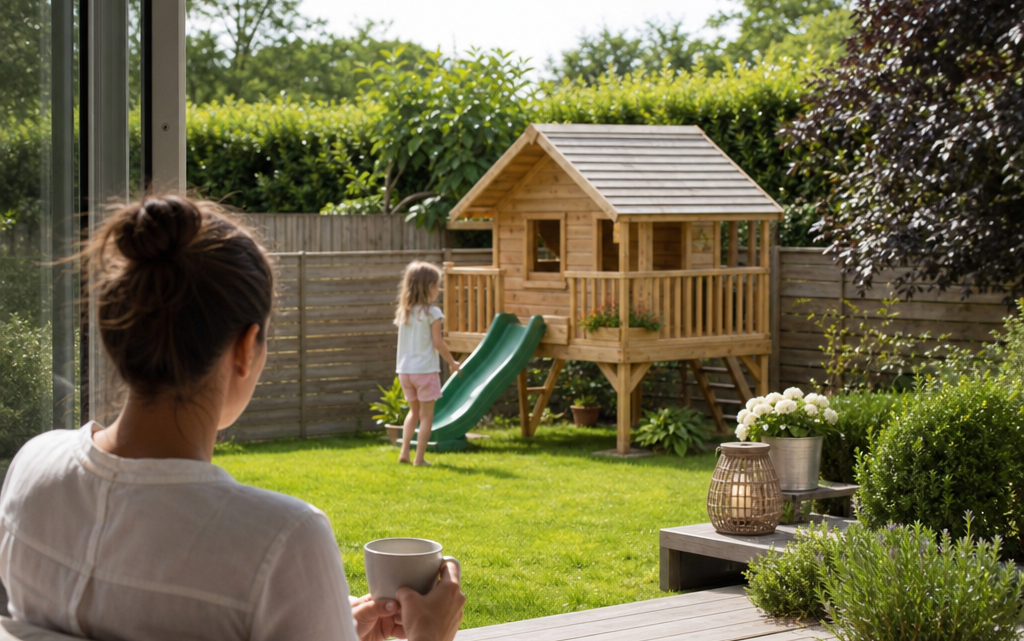
A children’s timber playhouse can quickly become the busiest corner of the garden: a café one minute, a den the next, and a quiet reading spot when the excitement settles. The safety question is not only whether the playhouse itself is suitable, but whether you can supervise it properly during everyday use. Good sightlines, sensible positioning and repeatable routines make a significant difference to how confidently you can let children play while you cook, garden, fold washing or sit nearby.
This article explains how to plan supervision around a children’s garden playhouse, with practical criteria for placement, visibility, access, checks and day-to-day rules. It uses a timber playhouse only as an example; the same principles apply broadly to most domestic children’s playhouses.
Inhaltsverzeichnis
Why sightlines matter in playhouse safety
Children’s playhouses are designed for imaginative play, but the way children use them is often unpredictable. They may carry toys in and out, lean out of windows, gather in groups, close the door, invent climbing games, or move between the playhouse and other parts of the garden. You do not need to watch every movement at close range, but you do need to be able to check quickly that play remains safe.
A good supervision layout gives you three things:
- A clear view of the entrance, so you can see who is going in and coming out.
- A partial view of windows or openings, so you can judge activity inside or near the structure.
- A safe route to intervene, without obstacles, slippery surfaces or awkward gates slowing you down.
The best position is rarely the furthest, quietest corner of the garden. A playhouse should feel like a special place for children, but not so hidden that adults cannot easily supervise it.
Choose a position you can see from normal adult activity areas
Before choosing a location, stand in the places where you naturally spend time: the kitchen window, patio doors, seating area, washing line, vegetable beds or home office window. Ask yourself whether you can see the front of the playhouse from at least one of those positions without leaning, opening a door or walking across the garden.
Use the “three-second check”
A useful test is whether you can look up and understand the situation within three seconds. You should be able to answer: Is the door open or shut? Are children entering and leaving normally? Is anyone sitting on the veranda, steps or railings? Are toys blocking the entrance? If you cannot tell without moving closer, the location may not be ideal for routine supervision.
Avoid blind corners and dense planting
Hedges, sheds, pergolas, tall planters and trees can create attractive garden zones, but they can also block adult sightlines. Avoid placing a playhouse behind dense shrubs or around a corner where children are completely out of view. If you do use planting nearby, keep it low and open so that the entrance and immediate surroundings remain visible.
Think about seasonal changes
A position that works in winter may be obscured in summer when shrubs leaf up and climbing plants spread. Likewise, low winter sun may shine directly into your eyes from a kitchen window, making supervision harder at certain times of day. Check the view in different light conditions if possible, and be prepared to prune vegetation as part of your safety routine.
Plan the approach route as carefully as the play area
Supervision is not only about seeing; it is also about reaching the playhouse quickly and safely. The route from the house or patio should be clear, reasonably level and free from trip hazards. Children will often run to and from the playhouse, carrying toys, blankets, cups or dressing-up clothes, so the approach needs to cope with energetic use.
Where possible, avoid routes that cross driveways, ponds, barbecues, tools, compost areas, washing line poles or steep changes in level. If the playhouse is set on grass, consider how muddy or slippery the ground becomes after rain. A simple, stable path or stepping area can reduce slips and make adult access easier.
Set the playhouse on a stable, visible base
A timber playhouse should be installed on a firm, level base in line with the manufacturer’s instructions. An uneven base can affect door operation, floor stability and drainage. From a supervision point of view, it can also create awkward thresholds where children trip while carrying toys in and out.
Choose a base position that allows adults to walk around the playhouse for inspection and maintenance. Do not push it tightly against a fence, wall or hedge if that prevents you checking the rear panels, roof felt, fixings or signs of rot. A small amount of access space around the structure makes everyday safety checks much easier.
Keep the doorway and windows within your supervision plan
Doors and windows are the key activity points in a children’s playhouse. Children gather in doorways, pass toys through windows, open and close catches, and sometimes use openings as part of role play. Your supervision plan should take account of these behaviours.
Door visibility
The door should ideally face towards the house, patio or main adult seating area. If that is not possible, position it so the front elevation is still visible from a regular supervision point. Avoid setting the door to face a fence, narrow side passage or concealed corner.
Window visibility and ventilation
Opening windows can help with light and ventilation, but they should remain easy to monitor. Make it a house rule that children do not climb through windows or lean heavily on window openings. Even where glazing is made from shatterproof safety material, the frame, catch and opening still need to be treated sensibly.
Door closing routines
Many children enjoy closing the playhouse door for a sense of independence. That can be fine if you can still hear and check on them. Teach children not to hold the door shut against another child, not to slam it, and not to block the doorway with furniture, toys or cushions.
Use product details as prompts for your own checks
When comparing or installing a playhouse, product details can help you identify what to supervise and maintain. For example, a timber model such as the 6×5’6 Shire Cubby Traditional Kids Wooden Playhouse includes features commonly seen in domestic garden playhouses: tongue and groove timber construction, an apex roof finished in felt, a door with a window, opening windows, a small veranda area and shatterproof safety glazing. Details like these are useful prompts, not guarantees that supervision is no longer needed.
If a playhouse has a veranda, pay attention to sitting, standing and jumping behaviour at the front. If it has opening windows, include catches and edges in your checks. If it has roof felt, inspect it periodically after bad weather. If it is timber and dip treated, follow the manufacturer’s retreatment guidance, because weathering and neglect can eventually affect both appearance and safety.
Create clear supervision zones
It helps to think of the garden playhouse area in zones. Each zone has a different level of risk and needs a slightly different routine.
Zone 1: inside the playhouse
This is where children may sit, crawl, arrange toys, role-play or close the door. Keep the interior uncluttered enough that children can move without tripping. Avoid heavy furniture, unstable stools, sharp-edged storage boxes or anything that could be used to climb to window height. Soft toys, lightweight play items and low storage are usually easier to manage.
Zone 2: the threshold and veranda
The doorway, step and any small veranda are high-traffic areas. Children pause here, change direction, wave, queue, negotiate games and sometimes push past each other. Keep this area clear of scooters, balls, buckets, trailing blankets and loose boards. If the surface becomes slippery with rain, leaves or mud, pause play until it is cleaned or dried.
Zone 3: the surrounding fall and running area
Even when a playhouse is not intended for climbing, children may jump off low edges or run around it. Keep the surrounding area free of hard obstacles such as tools, plant pots, garden furniture, hose reels and edging spikes. If you have younger children, leave more open space around the entrance so they are not forced into tight turns.
Practical checklist for everyday playhouse supervision
Use a short routine before children begin playing. It should take less than two minutes once it becomes familiar.
- Check the view: confirm you can see the entrance from your chosen supervision point.
- Check the approach: remove toys, hosepipes, tools, wet leaves and other trip hazards.
- Check the doorway: make sure it opens and closes freely without sticking or trapping fingers.
- Check windows: ensure any opening windows are secure and being used appropriately.
- Check the floor: look for damp patches, splinters, raised fixings or loose items.
- Check the veranda or threshold: clear anything that could cause slipping or crowding.
- Check the weather: avoid use during high winds, storms, icy conditions or heavy rain.
- Check the rules: remind children of no climbing on the roof, no slamming doors and no locking or holding anyone inside.
Set simple rules children can remember
Rules are most effective when they are short, consistent and explained calmly. Children do not need a long safety lecture every time they play. They need a few repeated expectations that match how they actually use the playhouse.
Good examples include:
- Walk on the veranda and at the doorway.
- Hands away from the door edge when it closes.
- No climbing on the roof, windows, railings or furniture.
- Do not shut anyone inside or block the door.
- Keep food and drinks outside unless an adult agrees.
- Stop and call an adult if something breaks, jams or feels sharp.
For younger children, demonstrate the rule physically. Show where fingers can be trapped, how to open the door gently, and where toys should be placed. For older children, explain that the playhouse is shared space and that rough play can make it unsafe for younger siblings or friends.
Match supervision to age, group size and behaviour
The amount of supervision needed depends on the children, not just the playhouse. A calm seven-year-old playing alone may need less close monitoring than three preschool children playing an excited chase game. Visiting children may also need closer supervision because they do not know your garden rules.
Younger children
Preschool children need frequent, direct checks. Stay within easy hearing distance and keep the entrance in view. Be particularly alert to door play, climbing attempts, carrying too many toys and disputes in tight spaces.
Mixed-age play
When older and younger children play together, set expectations for the older ones without making them responsible for safety. They can be asked to be gentle and keep the doorway clear, but an adult should remain in charge of supervision.
Playdates and visitors
Before a playdate begins, give all children the same brief rules. Do not assume visitors understand that windows are not for climbing through or that the door must not be held shut. A one-minute introduction can prevent many problems.
Common practical mistakes to avoid
Placing the playhouse where it looks best rather than where it is visible
A playhouse tucked behind a hedge or at the very end of the garden may look charming, but poor visibility makes routine supervision harder. Prioritise sightlines first, then adjust planting and decoration around that safer position.
Allowing storage to take over the interior
It is tempting to use a playhouse for storing outdoor toys, but too much clutter creates trips, blocked exits and climbing temptations. Keep storage low, light and limited.
Forgetting maintenance as part of safety
Timber playhouses need periodic care. Retreatment, checking roof felt, looking for splinters, and inspecting fixings are not just cosmetic tasks. They help keep the structure suitable for continued play.
Ignoring wet weather conditions
After rain, thresholds, verandas, grass and timber surfaces may become slippery. Even if the inside is dry, the approach may not be safe for running children. Check the whole route, not only the playhouse.
Relying only on product compliance
Safety standards and suitable materials are important, but they do not replace adult judgement. Children’s behaviour, garden layout, weather and wear over time all affect day-to-day safety.
Build safety checks into normal family routines
The easiest routines are attached to things you already do. For example, check the playhouse when you open the back door in the morning, before a playdate, after strong winds, and when putting garden toys away. A more detailed inspection once a month during heavy-use seasons is sensible.
Look for changes rather than perfection: a door that has started sticking, a window catch that feels loose, a rough patch of timber, felt lifting at the roof edge, damp collecting near the base, or screws and fixings that need attention. If you find a problem, pause play until it is resolved properly.
FAQ
Should the playhouse face the house?
In most gardens, yes. Facing the door towards the house, patio or main seating area usually gives the best supervision. If that is not possible, make sure the entrance is still visible from somewhere you regularly stand or sit.
How much space should I leave around a playhouse?
Follow the manufacturer’s installation guidance and leave enough room for children to move safely and for adults to inspect and maintain the structure. Avoid placing it so close to fences, walls or planting that you cannot check the sides and rear.
Can children play inside with the door closed?
That depends on age, behaviour and your ability to supervise. If the door is closed, you should still be able to hear the children and check on them easily. Make sure they understand not to hold the door shut, block the exit or trap fingers.
Are shatterproof windows enough to prevent window-related accidents?
Shatterproof safety glazing reduces the risk associated with broken glazing, but children still need rules about windows. They should not climb through them, lean heavily on them or use the frame as a handhold for climbing.
How often should I inspect a timber playhouse?
Do a quick check before play and a more thorough inspection regularly, especially during spring and summer. Also check after storms, heavy rain, frost or long periods without use. Follow the manufacturer’s maintenance instructions, including any retreatment requirements.
Conclusion
Safe supervision around a children’s garden playhouse begins with placement. Choose a position where you can see the entrance quickly, reach the playhouse without obstacles, and inspect the structure easily. Keep the doorway, windows, threshold and surrounding area clear, and use simple rules that children can remember.
A well-made timber playhouse can support years of imaginative play, but everyday safety depends on how it is used, maintained and supervised. By planning sightlines, setting routines and checking small issues before they become bigger problems, you can give children a more independent play space while keeping adult oversight practical and reliable.

