
Keeping a Children’s Wooden Playhouse Comfortable in Warm Weather
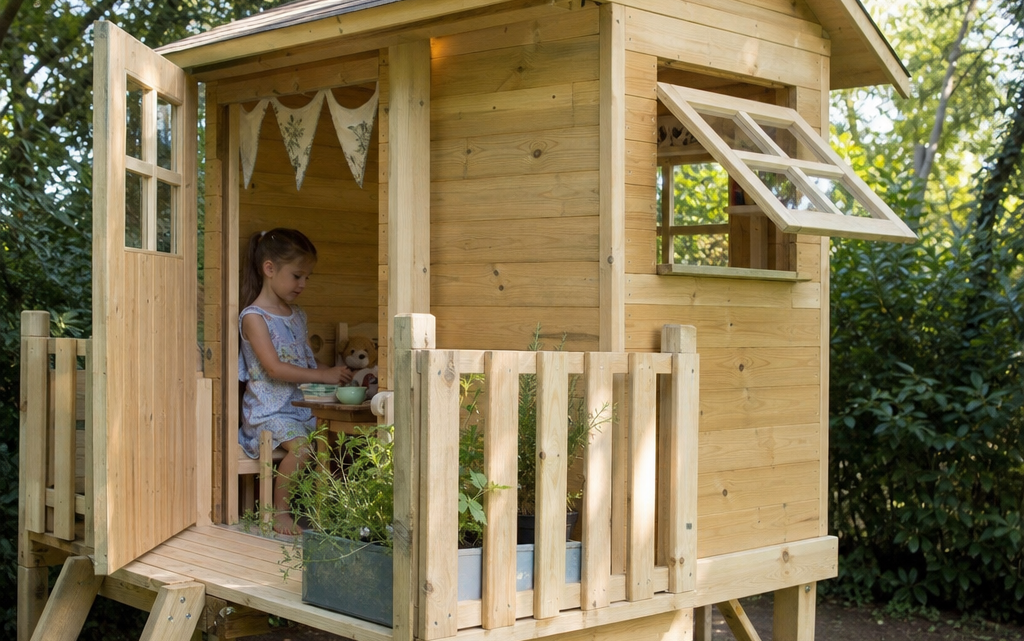
On a bright summer afternoon, a children’s wooden playhouse can quickly become the most popular part of the garden. It can also become stuffy, over-warm and uncomfortable if it sits in full sun with the door closed and little air movement. Because children may not always notice or explain that they are getting too hot, you need to think about comfort and ventilation before warm weather arrives, not after the playhouse has already turned into a miniature greenhouse.
This guide explains how to keep a children’s wooden playhouse comfortable in warm weather using practical, low-risk measures: sensible positioning, shade, ventilation, safe habits, and regular checks. It also looks at common mistakes, what to consider before buying or placing a playhouse, and how typical features such as opening windows, an apex roof and shatter-resistant glazing can help when used properly.
Inhaltsverzeichnis
Why wooden playhouses get warm in summer
Wood is a natural, attractive and practical material for garden playhouses, but a small timber building can still heat up quickly. Sunlight warms the roof, walls and glazing. Warm air collects inside, particularly near the roof space, while still air makes the interior feel hotter than the actual temperature. If the playhouse has windows but they are left shut, there may be plenty of light but very little fresh air.
Children’s playhouses are also compact spaces. A few children playing actively inside will add body heat, and soft furnishings, costumes, cushions and toys can reduce airflow. The aim is not to make the playhouse feel like an air-conditioned room, but to keep it well ventilated, shaded where possible and suitable for short, supervised play sessions in warm conditions.
Start with the right position in the garden
The position of a playhouse has a major effect on summer comfort. If you are installing a new playhouse, or considering moving an existing one, assess the garden at different times of day before deciding where it should go.
Choose partial shade rather than deep shade or full sun
A playhouse in full sun from late morning to late afternoon is likely to become hot, particularly if the roof receives direct sunlight for several hours. Partial shade is usually better. For example, a position that receives morning sun but has shade during the hottest part of the afternoon can keep the interior more comfortable.
Avoid placing the playhouse in permanently damp, dark shade under dense trees or against a wet boundary. Although shade helps with summer heat, poor airflow and persistent damp can encourage timber deterioration, mould and slippery surfaces. The best position is usually open enough for air to circulate, but protected from the strongest midday and afternoon sun.
Think about wind direction and cross-ventilation
Ventilation works best when air can enter from one side and leave from another. If the playhouse has opening windows, try to position it so that breezes can reach them rather than placing all openings tight against a fence, hedge or wall. Even a small gap around the structure can make a noticeable difference.
Do not block vents, windows or the doorway with storage boxes, outdoor furniture or climbing plants. A pretty setting is worthwhile, but ventilation needs clear air paths.
Use shade as your first line of defence
Shade reduces heat before it enters the playhouse. That makes it more effective than trying to cool the interior after it has already warmed up.
Practical shading options
- Natural shade: A nearby tree or tall shrub can help, provided it does not drip sap, drop heavy branches, or keep the timber constantly damp.
- Temporary shade sail: A properly secured shade sail can reduce direct sun on the roof and walls. It must be installed safely and removed in strong winds.
- Freestanding parasol: Useful for flexible shade, especially over a veranda or doorway, but it must be stable and never used in windy weather.
- Light-coloured exterior finishes: When appropriate for the product and treatment guidance, lighter colours generally absorb less heat than dark colours.
Any shade solution should be safe around children. Avoid low cords, unstable posts, sharp fixings or heavy items that could fall. If you attach anything near the playhouse, check that it does not damage the roof felt, walls or treatment.
Make best use of doors and opening windows
Ventilation is about controlled air movement. In many playhouses, the most effective warm-weather habit is simple: open the door and opening windows before children start playing, then allow the interior to air for a few minutes.
Create airflow before play begins
On hot days, open the playhouse early, before the sun is at its strongest. This lets trapped warm air escape and helps the timber and internal air temperature settle. If you wait until children are already inside and uncomfortable, the playhouse may take longer to cool.
Supervise open doors and windows
Opening windows can make a significant difference, but children should be supervised so fingers, hands and clothing are kept clear of moving parts. Use the openings as designed by the manufacturer. Do not wedge windows or doors in a way that could cause them to slam, twist the frame, or create a trapping hazard.
If the playhouse has a door with a latch, make sure children cannot accidentally lock or trap themselves in. Young children should always be able to attract your attention, and you should be able to reach the door quickly.
Decision criteria before buying or setting up a playhouse
If warm-weather comfort is important in your garden, use the following criteria when comparing playhouses or choosing where to install one.
- Opening windows: Fixed windows provide light, but opening windows provide useful ventilation. More than one opening can help create cross-flow.
- Door design: A door with glazing can increase natural light, but you still need safe ventilation and easy access.
- Roof exposure: The roof receives a lot of solar heat. Consider whether the roof will be shaded during the hottest part of the day.
- Glazing material: Shatter-resistant glazing is preferable for children’s use, but glazing still allows sunlight in, so shade remains important.
- Internal size: Smaller spaces warm up faster and feel stuffier when several children play inside.
- Safety standards: Check that the playhouse is designed for children and follow the manufacturer’s assembly, siting and maintenance instructions.
- Maintenance requirements: Timber treatment, roof felt condition and sound joints all affect long-term comfort and weather performance.
As a practical example, a 6 ft x 5 ft timber playhouse with two opening windows, a glazed door, tongue and groove cladding and a felted apex roof gives you several useful starting points for warm-weather comfort: daylight, ventilation openings and a weather-resistant timber structure. Those features still need to be supported by sensible siting, shade and supervision.
Warm-weather playhouse checklist
Use this checklist on warm days, particularly during school holidays or when children are likely to spend longer periods in the garden.
Before children go in
- Open the door and any opening windows for several minutes.
- Check whether the interior feels hotter than the outside air.
- Make sure the floor is clear and not slippery.
- Remove unnecessary blankets, heavy cushions or clutter that blocks airflow.
- Check that windows and doors move freely and are not likely to slam.
- Confirm that shade is in place if the sun is strong.
- Keep drinks available nearby and encourage regular breaks.
During play
- Supervise regularly, especially with younger children.
- Limit playhouse time during the hottest part of the day.
- Watch for flushed faces, irritability, tiredness or complaints of feeling unwell.
- Keep the doorway clear so children can leave easily.
- Encourage quieter activities inside and more active games outside in shade.
After play
- Air the playhouse again to release heat and moisture.
- Remove damp clothing, wet toys or spilled drinks.
- Close windows and doors as required for weather and security.
- Check that any temporary shade equipment is safe, secure or put away.
Keep the interior simple and breathable
It is tempting to make a playhouse cosy with rugs, curtains, cushions and role-play accessories. These can be enjoyable, but in warm weather they may trap heat, restrict airflow and collect moisture or dust. Choose lightweight items that are easy to remove and clean. Avoid overfilling the space with storage boxes, toy kitchens and bulky furniture if they block windows or reduce the air path from the doorway.
If you use curtains, keep them short, simple and safely fitted. They should not hang near hinges, catches or anything children can pull down. In hot weather, curtains may reduce glare, but they can also restrict air movement if they cover open windows. A better approach may be external shade that stops the sun before it reaches the glazing.
Manage play times around the weather
Comfort is not only about the playhouse; it is also about when and how it is used. On very warm days, encourage play in the morning or later afternoon rather than at midday. Shorter sessions are sensible when temperatures are high, particularly for very young children.
If the playhouse feels hot when you step inside, treat that as a warning. Children may be more focused on play than on their own comfort, so you should set the limits. Ask them to take breaks in the shade, drink water, and move to a cooler activity when needed.
Consider safe air movement, not improvised cooling
In most gardens, the safest and most practical cooling methods are shade and natural ventilation. Be cautious with electrical cooling. Domestic fans, extension leads and plug-in appliances may not be suitable for outdoor use unless they are specifically rated and installed safely. Cables across a garden create trip hazards, and electrical equipment must be protected from rain, damp and children’s interference.
Do not place bowls of ice, water trays or wet towels inside as a makeshift cooling system if they create slipping hazards, damp timber, mess or mould. Keeping the playhouse dry and ventilated is better for both children and the structure.
Maintenance that supports ventilation and comfort
A well-maintained playhouse is easier to keep comfortable. Sticking windows, swollen timber, damaged felt or gaps caused by movement can all affect how the building performs. Timber naturally expands and contracts with changing weather, so regular checks are worthwhile.
Check windows, door and roof
Before summer, open and close all windows and the door. Look for stiffness, loose fixings or rough edges. Check the roof felt for damage, as leaks can lead to damp interiors and musty smells. Dampness and poor ventilation often go together, so dealing with weatherproofing problems helps summer comfort as well as winter durability.
Follow treatment guidance
Many timber playhouses require retreatment to maintain protection against rot and weathering. Use child-safe products suitable for the intended use, and follow drying and ventilation instructions carefully before allowing children back inside. Do not treat the timber on a warm morning and then let children play inside while fumes remain or surfaces are still tacky.
Common practical mistakes to avoid
Leaving the playhouse shut all day
A closed playhouse in sunshine can trap heat. Open it before use and allow air to move through. If it has been closed for several hot days, air it thoroughly before children go inside.
Putting it in the hottest part of the garden
A level, convenient spot is not always the most comfortable one. If the chosen position receives strong afternoon sun with no shade, you may need a shading plan from the start.
Blocking windows with furniture or decorations
Windows are not just decorative. If they open, keep them accessible and clear so they can do their job.
Using dark finishes without considering heat
Dark exterior colours can look smart, but they may absorb more heat. If you are repainting or treating the playhouse, consider whether a lighter shade would be more comfortable in a sunny garden, while still following the manufacturer’s guidance.
Assuming glazing safety means heat safety
Shatter-resistant glazing is important for children, but it does not stop the sun warming the interior. You still need ventilation, shade and sensible play times.
Adding unsafe modifications
Cutting extra vents, drilling through panels or altering windows may affect strength, weather resistance, safety compliance or guarantees. If you think extra ventilation is needed, check the manufacturer’s advice before making changes.
FAQ
How hot is too hot for a children’s playhouse?
There is no single indoor temperature that applies to every child and every situation, but if the playhouse feels uncomfortably hot to you, it is not suitable for prolonged play. Be especially cautious during heatwaves, at midday, and with younger children. Use shade, ventilation and shorter play sessions.
Should I leave the windows open all summer?
Open windows are useful during supervised play and airing, but they may not be suitable to leave open all the time because of rain, wind, security and possible damage. Open and close them according to the weather and the manufacturer’s instructions.
Is a fan a good idea inside a playhouse?
Usually, natural ventilation and shade are safer and simpler. Only use electrical equipment outdoors if it is suitable for that environment and can be used without trip, shock or interference risks. When in doubt, avoid it.
Can plants around the playhouse help keep it cool?
Plants can provide shade and improve the feel of the area, but keep them trimmed so they do not block airflow, hold damp against the timber, or create hidden areas where pests can gather.
Do opening windows make a big difference?
Yes, especially when combined with an open door or another opening. They allow warm air to escape and fresh air to enter. Their benefit depends on clear airflow, safe use and sensible positioning.
Conclusion
Keeping a children’s wooden playhouse comfortable in warm weather is mainly about prevention: choose a sensible position, provide shade, use opening windows and doors properly, and supervise play during hot periods. Features such as opening windows, safe glazing and a well-built timber structure are helpful, but they work best when supported by good habits and regular maintenance.
Before children settle in for summer play, step inside the playhouse yourself. If it feels fresh, shaded and comfortable, it is far more likely to be a pleasant space for imaginative games. If it feels stuffy or hot, open it up, add shade, shorten the session or move play elsewhere until conditions improve.

